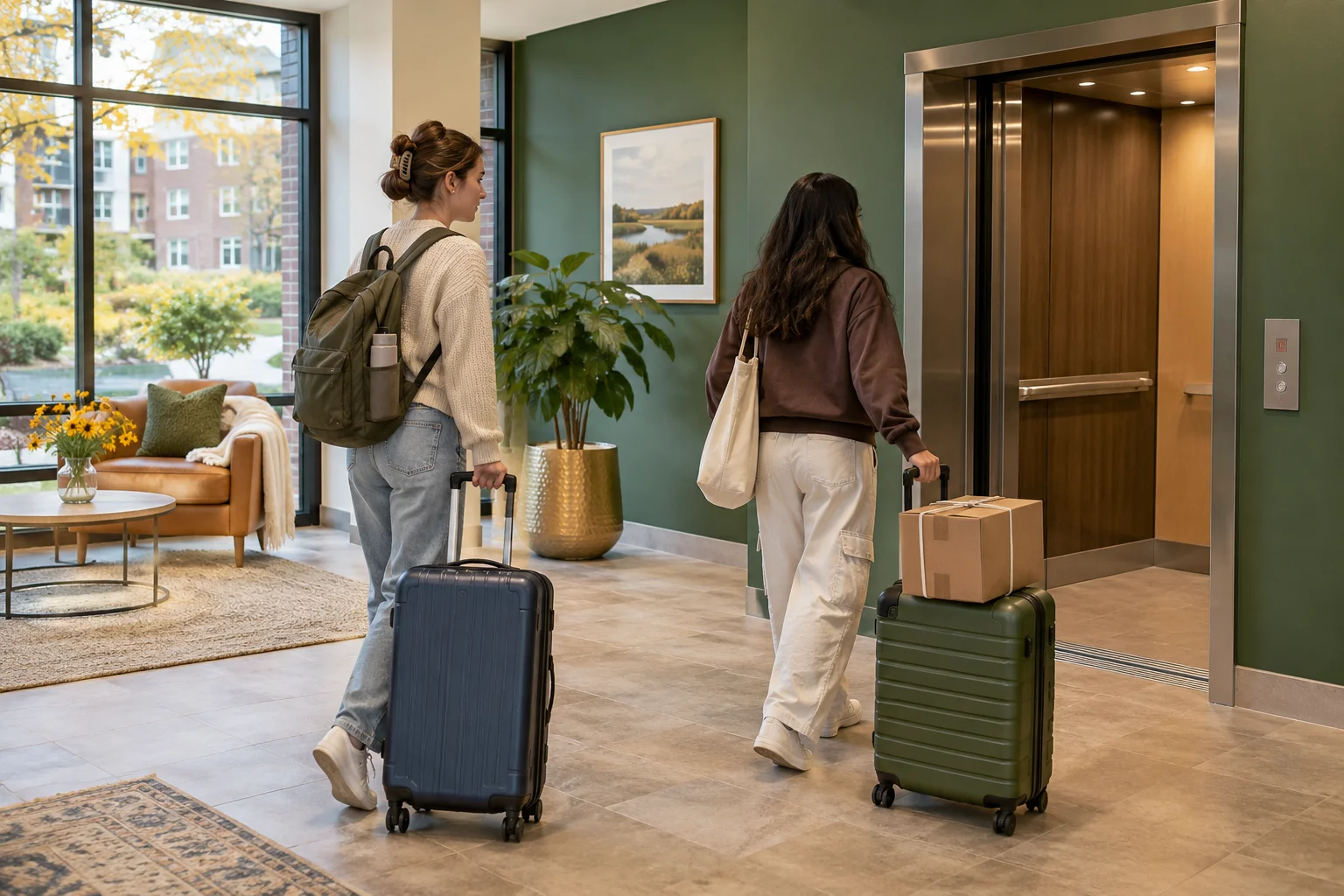
Start with the exact property and work outward. A clear description of its stairs, parking, doorways, and access rules will help you choose the right equipment and explain the job to a moving provider. This guide focuses on coordinating those details without assuming that every building operates the same way. Whether you are changing apartments, buying a home, or arriving from another Iowa city, use the steps below to turn separate tasks into a workable schedule.
Start with the property, then choose the date
Before selecting a truck or asking friends for help, confirm when you can legally enter the destination. A lease beginning on a particular date does not necessarily mean that keys will be ready first thing that morning. Ask the landlord or seller for a definite handoff time and identify who will provide the keys. Write down any cleaning, inspection, or repair work that must happen beforehand.
Build your schedule around that answer. If your current home must be empty before the new one becomes available, compare temporary storage, an additional rental day, and overnight lodging before you commit. Keep important documents, medication, chargers, and enough clothing for the gap with you. Do not place those essentials deep inside a loaded truck. A short overlap between properties can simplify the job, but only include it in your plan when both agreements actually allow it.
Plan the truck approach and unloading position
A passenger navigation route does not answer every question for a loaded moving truck. Share the property address, building number, and approved entrance with the driver, then ask the driver to assess the approach. Look for overhead obstructions, steep driveways, restricted turns, and a suitable place to stop. Never assume an available curb space can be reserved with household objects.
Ask management or the city about any permissions required for the intended loading arrangement. Rules can differ between private parking areas and public streets. Keep sidewalks, emergency access, and neighboring driveways usable. If the truck must remain farther from the entrance, disclose the carrying distance while obtaining estimates. On moving morning, make one person responsible for directing arriving helpers to the correct entrance. That avoids repeated trips through a courtyard or an accidental stop at the wrong building.
Set up Coralville utilities deliberately
Coralville provides an official Start / Stop Utility Service page and an online form for starting city utility service. Use those resources to confirm the account process for your address. Ask which services are included in a rental agreement and which require an account in your name. A payment made by the previous resident does not establish service for your household.
Record the requested start date, the confirmation, and any remaining action. Arrange the end date at the old address separately. If you are moving within Coralville, tell utility staff that it is a transfer between properties and ask how both accounts should be handled. For electricity, gas, and internet, verify the provider at the exact location. Keep setup information in one folder so that a missing confirmation is visible before move day, when there is still time to resolve it.
Compare estimates using the same inventory
Prepare one inventory and give the same version to every provider you contact. Include beds, desks, dining furniture, shelves, exercise equipment, patio items, and boxes. Mention anything that cannot be carried normally, including unusually heavy cabinets or delicate glass. Explain the access conditions at both properties and whether packing or furniture assembly is needed.
Ask how each estimate treats travel, minimum time, stairs, long carrying distances, extra stops, and materials. Read the written cancellation and rescheduling terms. A lower headline number is difficult to compare when one estimate assumes a ground floor and another includes two flights of stairs. Confirm who supplies the vehicle and who is responsible for unloading. Before paying a deposit, verify the provider's identity and contact information through the provider's own official channels. Keep the estimate and inventory together for reference.
Pack for an organized apartment arrival
Use room names that match the destination. If a spare bedroom will become an office, label its boxes Office instead of preserving the old room name. Add a brief contents description on two sides of each box and mark fragile items clearly. A numbered inventory is helpful when several rooms contain similar electronics or books.
Choose manageable box sizes. Books belong in small cartons, while light linens can fill larger ones. Cushion breakable items individually and prevent movement inside the carton. Keep cleaning supplies separate from food and check the provider's restrictions before packing liquids or household chemicals. Prepare a first evening box with toilet paper, soap, towels, basic dishes, bedding, and a change of clothes. Carry keys and lease documents personally. The goal is to make the home usable before every carton is opened.
Handle lease inspections and condition records
Ask both landlords how they document property condition and what is expected at checkout. Photograph the empty rooms, appliances, walls, flooring, and any existing damage using clear, well lit images. Include close views where needed, but also capture enough of the room to show where the issue is located. Save the originals outside a single phone in case it is lost.
At the destination, report concerns through the method required by your agreement. Keep a copy of what you submit and the response. Do not assume a verbal comment to a maintenance worker replaces a formal condition report. At the old apartment, complete the agreed cleaning and key return process. Record when keys, access cards, and parking devices are returned. These administrative tasks deserve scheduled time after loading, rather than becoming a rushed interruption while the truck is waiting.
Protect a working day during the move
If you work remotely, treat your workstation as a small separate project. Back up essential files before equipment is disconnected. Photograph cable connections, label power supplies, and place small adapters in a clearly marked pouch. Carry the equipment you need immediately in a secure vehicle rather than burying it behind household furniture.
Arrange internet installation early enough to understand whether an appointment is necessary. Ask what equipment is supplied and whether existing wiring is usable. Have a realistic backup for essential calls if the connection is not ready, and check any workplace security requirements before using a public network. Reserve a quiet room for urgent work after arrival. Scheduling a full day of meetings during unloading makes access questions and furniture placement harder for everyone, so protect a block of time for the move itself.
Keep children and pets away from loading routes
Open doors, unfamiliar people, loose packing materials, and reversing vehicles create a difficult environment for children and pets. Arrange supervision before the crew arrives. If they remain at the property, choose a room away from the main carrying route and make sure every helper understands that it must stay closed.
Pack familiar food, water bowls, bedding, and comfort items where they can be reached quickly. Keep veterinary records and medication with your personal essentials. Transport animals in suitable carriers or restraints, and check that identification information is current. At the new home, inspect windows, gates, and doors before allowing exploration. For children, setting up one calm space with familiar belongings can make the first evening easier. Assign one adult to their needs so that safety decisions are not split between several distracted helpers.
Allow for Iowa weather and floor protection
Check the forecast as the date approaches and discuss weather decisions with your provider. Ask how rain, snow, ice, lightning, or strong wind could change the schedule. A covered entrance does not protect the entire route between the vehicle and the building. Keep suitable footwear, towels, and an accessible change of clothes available.
Use floor protection appropriate to the surface and secure it so that edges do not become trip hazards. Avoid carrying heavy furniture across wet thresholds without first making the footing safe. Keep cardboard and other packaging out of shared walkways. If conditions become unsafe, pause and follow the provider's procedure rather than trying to preserve an unrealistic arrival time. Allow extra time for checking entrances and clearing a permitted path. Weather flexibility is most useful when it has been discussed before the truck is loaded.
Make the first week manageable
Unload beds, essential kitchen equipment, bathroom supplies, and work necessities before decorative items. Position large furniture using a simple room sketch so that boxes do not block the places where heavy pieces belong. Keep one exit route clear throughout unpacking and flatten empty cartons as you go.
Coralville's Public Works and Utilities resources are a useful starting point for questions about household services. Check current collection instructions before placing moving waste outside, especially large items and unusual packaging. Update mailing information and account addresses, then inspect the home again after furniture is in place. Make a short list of repairs, missing hardware, and remaining purchases. Prioritize what affects daily use. A move is easier to finish when the final tasks are specific, scheduled, and small enough to complete between normal responsibilities.
Build a final handoff sheet
Create a single page that can be read without opening several apps. Include the addresses, unit numbers, approved arrival window, access instructions, contact names, and the order of any stops. Add the place where the truck should wait if the destination is not ready. Share only the details each participant needs, particularly when entry codes or personal information are involved.
List who will meet the driver, who can authorize a change, and who will check the empty property. Put the last inspection, key return, and first essential delivery on the same timeline. Keep digital copies available offline and carry a paper version if that will be more practical. Before departure, review the sheet against your lease, written estimate, and utility confirmations. Resolving one conflicting time now is easier than asking a loaded truck and several helpers to wait later.
Keep a separate apartment checkout bag
An apartment checkout bag should remain behind after most belongings have left. Include the cleaning items you are permitted to use, trash bags, paper towels, a phone charger, and the paperwork needed for the inspection. Keep a small supply of drinking water and a snack available while you finish. Do not pack this bag automatically when the last cartons are carried out.
Use it during a systematic final circuit. Look behind doors, inside appliances, above cabinets, and in any storage area assigned to the unit. Check that the forwarding information is correct and that every access device is accounted for. Photograph the completed condition only after the final cleaning. Then remove the bag, lock up as instructed, and complete the key return. This sequence makes checkout a defined job rather than a hurried return trip after everyone has already reached the new home. Check the refrigerator, bathroom cabinet, and any rented storage locker before considering the old apartment fully cleared out.
Official resources for your planning
Coralville: Start / Stop Utility Service ↗Coralville Public Works & Utilities ↗Check current official instructions for your address and moving date. This guide provides planning information and does not confirm service availability.