The wider Quad Cities area also makes it important to distinguish an Iowa address from an Illinois destination. Start with access and timing, then organize belongings and services. This guide offers practical preparation without assuming a particular mover operates from Davenport or serves every nearby community.
Confirm both addresses and the kind of move
Write the full pickup and delivery addresses in one document, including unit numbers and contact names. If the route crosses into Illinois, tell every provider at the estimate stage. A short distance across a state line can affect the agreement and the checks you should make. Ask the business to explain its authority and the documentation appropriate to that journey.
For a move entirely within Davenport, distance is still only part of the job. Stairs, elevators, storage areas, and the walking route can determine how much handling is involved. Include every planned stop, such as a storage unit or a relative's house. Give the same inventory and access description to each estimator so their proposals cover comparable work.
If your destination is across the Mississippi, ask how the provider classifies the trip and which written documents you should receive. Verify credentials through the responsible official resources rather than relying on a logo or an advertisement. Keep a record of the business name used in the agreement, the contact you booked through, and the person expected to arrive. Ask who to contact if the vehicle or crew differs from the confirmation. These questions establish a clear arrangement without assuming that a short regional distance makes verification unnecessary.
Inspect the route from curb to room
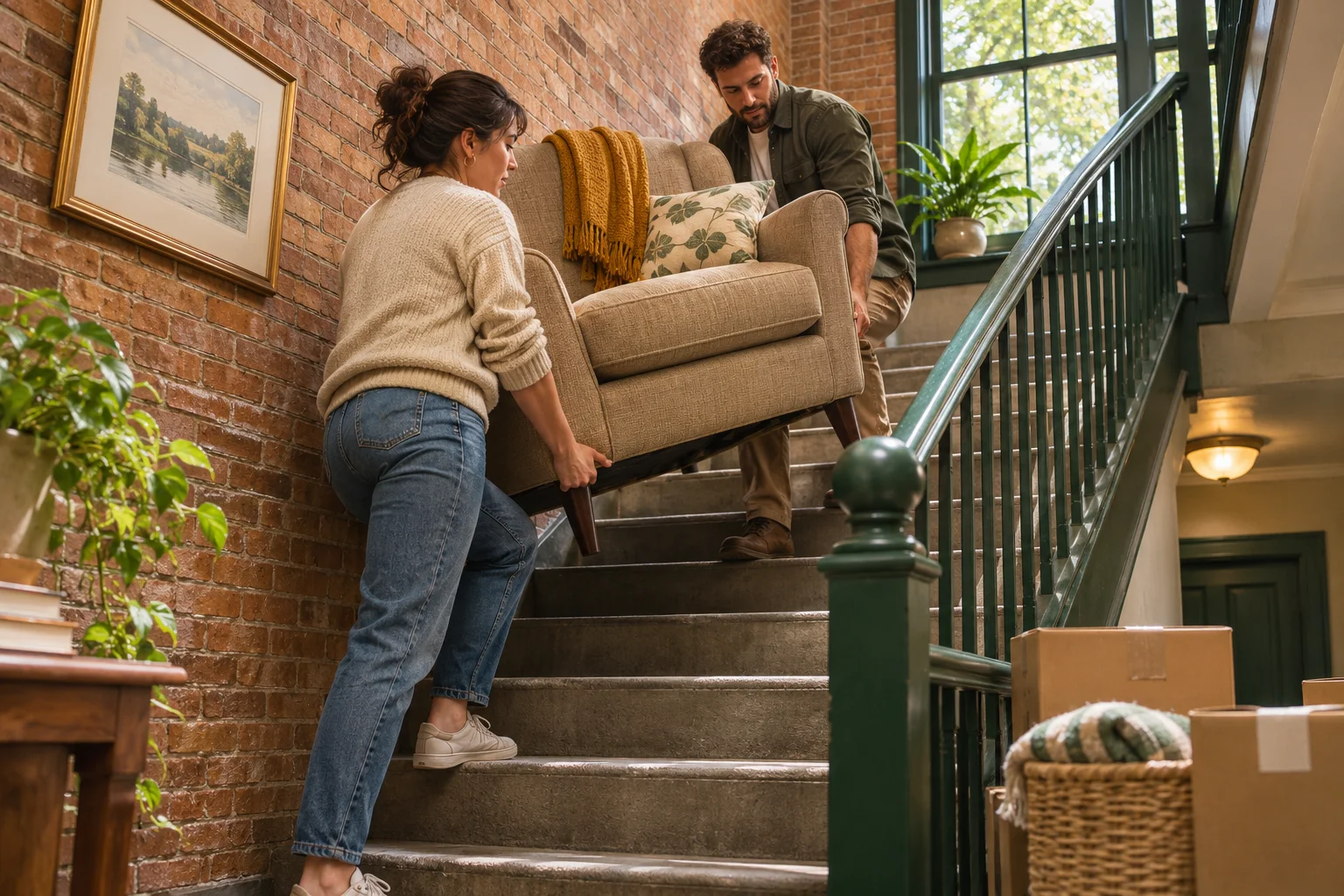
Visit the property before moving day if possible. Identify the door that management permits movers to use and measure tight turns along the entire route. An entrance that accepts a carton may still stop a wide sofa. Take photographs of steps, rails, doors, and any passage that will be difficult to describe over the phone.
Ask whether a truck can stand in a driveway or approved loading area without blocking access. For on-street loading, consult current city parking information and any applicable permission process. Do not assume that a quiet block permits an oversized vehicle or that a resident parking arrangement covers moving equipment. Confirm an alternative if the first intended space is unavailable when the driver arrives.
For a building with a shop or office at street level, confirm whether residential moves must use a rear or service entrance. Ask what clearance is needed through gates or access lanes and whether a manager must unlock them. Keep the route usable for other occupants. A convenient open space is not automatically available for a truck simply because it is near the door. Share photos with the provider and identify the person who can answer an access question when the driver is approaching.
Plan bridge travel and the final approach
The Mississippi River is central to the region's geography, but the best crossing for a household move depends on the addresses and current road conditions. Check official traffic information close to departure. Ask the driver to review the route for the vehicle being used, including height clearance and any posted restrictions. A navigation route designed for a passenger car may not be suitable for a truck.
Allow enough time between departure and a reserved delivery window. Do not schedule a building elevator on the assumption that traffic will be perfect. Share the exact loading entrance with the driver, because a public lobby may be on the opposite side of a building. Keep the property manager's contact details available in case the approach changes.
Decide which services the household needs
Compare full transport, packing help, labor-only assistance, and a self-move against the possessions and access involved. If you rent the truck, confirm who drives it, who supplies protective materials, and what the labor booking includes. A provider may not handle a piano, safe, or large exercise machine under its standard arrangement. Describe those pieces before requesting a price.
Read each written estimate for minimum time, travel, additional stops, materials, waiting, and cancellation terms. Ask how changes will be recorded and approved. Choose a clear scope rather than relying on an informal hourly figure. Availability and service coverage must be confirmed with the selected provider; this guide does not establish either for a particular moving business.
Sort unwanted items before loading week
Deciding what to leave behind is easier when it happens before everything is boxed. Separate usable items for donation or resale from material needing recycling or disposal. Arrange pickup or transport early and confirm that the recipient accepts the item's condition. A delayed handoff should not force unwanted furniture into the moving truck at the last minute.
Davenport publishes solid waste and excess waste information through its official website. Use those resources to check how your unwanted material should be handled. Ordinary cart service and an unusually large cleanout are different situations. Review current preparation and scheduling instructions rather than leaving a pile at the curb. Keep hazardous materials and electronics separate until you identify an appropriate disposal route.
Understand the local service handoff
The city's garbage collection information explains that starting or stopping water service with Iowa American Water also enrolls or removes an address from the solid waste collection system. Verify the current process for your home, especially if you rent or live in a shared building. Ask the owner which accounts belong in your name and which remain part of the property arrangement.
Electricity, gas, and internet require their own checks. Contact the providers using official channels, record start and stop dates, and save written confirmations. Allow for any installation appointment that requires an adult at the property. Maintain utilities at the old address for the period required by your lease or closing agreement, including final cleaning when necessary.
At a rental, ask whether the water-related account is established by the resident or retained by the owner. The city's general description is a starting point, while the lease determines which tasks are assigned to you. Verify directly before creating or closing an account. Photograph the condition of any collection equipment that belongs with the property and report a missing cart through the current service process. Keep the service start date separate from the day boxes arrive if your occupancy responsibility begins earlier.
Pack so every box has a destination
Use room names that will make sense in the new home. A carton marked office is more useful than one marked spare room if the spare room becomes a bedroom after the move. Add a few words describing the contents, and mark fragile cartons clearly after giving them proper internal protection. Keep dense items in boxes that remain reasonable to lift.
Carry important documents, medicines, valuables, and essential electronics yourself. Prepare a first-night set with bedding, basic toiletries, towels, chargers, and simple food preparation items. Identify any cartons that must remain accessible during a storage period. A clear opening order lets you use the home without spreading every possession across the floor on arrival.
If the load must be divided between a home and storage, put both destinations on the box labels. Provide a separate list of furniture for each stop and agree on the sequence before loading. A carton needed immediately should not be buried behind items destined for a unit you will not reopen for weeks. Keep a copy of the inventory outside the vehicle. Photograph the storage arrangement after placement so you can locate an item later without unloading everything into a shared access lane.
Prepare appliances and difficult furniture
Read the manufacturer's moving guidance for appliances you own. Ask the provider what preparation it requires and whether disconnection or installation is included. Some work may need a qualified professional. Empty, clean, and secure equipment appropriately, and make arrangements for anything the transport company will not carry.
For beds, shelving, and desks, photograph the assembled piece before removing parts. Bag hardware and label it with the item name. Keep needed tools separate from cartons that will be buried in the load. Measure stair landings and doorways for large furniture at the delivery address. If an item cannot safely fit, resolve the alternative before the truck and helpers are waiting outside.
Prepare for weather along the whole route
Check the forecast for both addresses and the travel period. Rain can weaken boxes left outside; winter conditions can obstruct steps and loading ramps. Keep the path clear and use floor protection that does not create a slip hazard. Discuss responsibility for snow or ice removal with the property owner when relevant.
If a river or road advisory affects the route, follow official instructions and use a suitable alternative. Do not infer safety from the distance of the trip. Ask the provider how unsafe access or severe weather affects the schedule before a problem arises. Keep drinking water and appropriate clothing available, and allow rest breaks when handling becomes physically demanding.
Run loading and delivery with clear decisions
Choose one person to answer questions and approve changes. Begin with a short walk-through showing what stays, what moves, and what requires extra care. Keep children and pets away from the active route. Avoid placing open boxes or cleaning supplies where people must carry furniture.
At delivery, position the largest pieces before filling rooms with cartons. Check for visible issues and follow the provider's reporting instructions. Do a final vehicle inspection and compare delivered items with your inventory. Keep paperwork, condition photographs, and payment records together. Before leaving the old home, inspect closets, drawers, garage shelves, and outdoor storage for things that are easy to overlook.
Settle the address before decorating
Make the bedroom and bathroom usable first, then establish basic cooking and work areas. Locate shutoffs, the electrical panel, and the most direct exits. Test locks and essential equipment, and report property problems promptly. Place empty cartons where they cannot block hallways or equipment, then follow current recycling instructions for preparation.
Update the address with organizations that need it through their official channels. Include employers, financial accounts, insurers, healthcare contacts, and recurring deliveries. Check that future packages use the full unit designation. For a shared building, learn how deliveries and large-item disposal work before ordering furniture or leaving packing materials in a common space.
For someone arriving from outside the Quad Cities, prepare a short personal orientation after the move. Locate the places required for ordinary routines, such as a food shop, the route to work, and a healthcare contact. Verify addresses and opening information through the organizations themselves. Keep important contacts saved separately from the moving paperwork. Establishing those practical routines can wait until essential rooms are safe, but planning them prevents every errand from becoming a separate search while the household is tired.
Use nearby guides for the other end
Bettendorf, Clinton, Muscatine, and Burlington provide additional Iowa destination context when your move extends beyond Davenport. Each address needs its own checks for utility responsibility, parking, and building access. A regional connection does not mean one city's services or rules continue across the municipal boundary.
Finish with a concise written schedule that includes possession time, vehicle access, inventory, contacts, and service dates. Review the plan with the people actually helping. Resolve unanswered questions with the property manager, city, or provider that controls the answer. That preparation gives you a practical basis for comparing arrangements and starting life at the new address.
For a move with more than one stop, confirm the contact and access window at each location. Share the agreed sequence with everyone receiving belongings. Keep the cartons for separate destinations visibly identified. A clear stop list helps the driver avoid unnecessary handling and lets each recipient prepare the space before the relevant part of the load arrives.
Official resources for your planning
City of Davenport garbage collection overview ↗City of Davenport excess waste options ↗Check current official instructions for your address and moving date. This guide provides planning information and does not confirm service availability.