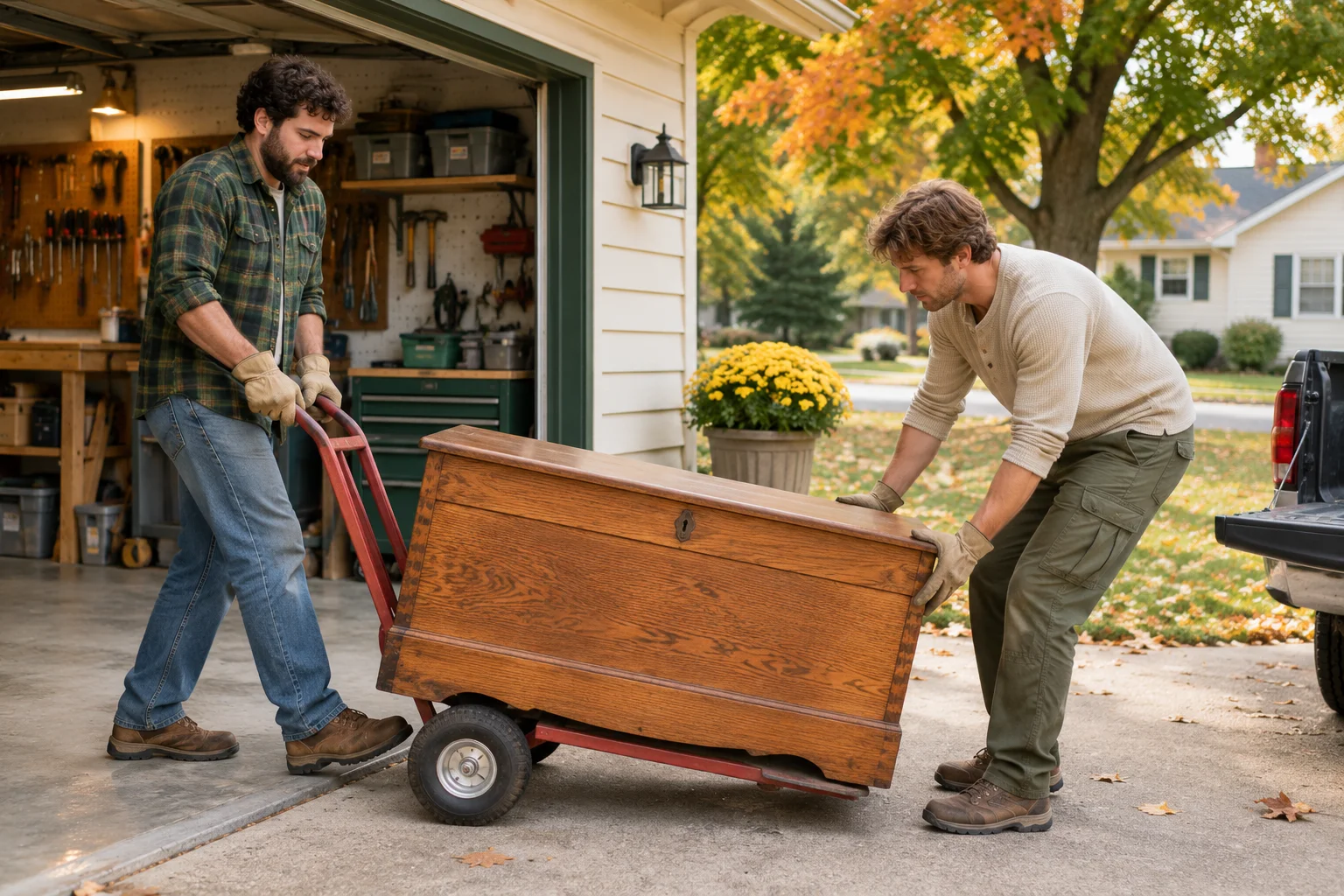
Begin by understanding what you own and how it will enter the new property. Then connect the inventory to a date, an access plan, and a written agreement with the provider you choose. This guide emphasizes the practical work of moving an established household without assuming that a particular company offers specialist transport or serves every address. Confirm those details directly before booking the move.
Walk the whole property before estimating
Start your inventory outside the main rooms. Look through the garage, shed, basement, porch, and any rented storage. Photograph the broad contents of each area, then identify the pieces that need individual descriptions. A workbench, chest freezer, or large shelving unit can require more planning than several ordinary boxes.
Decide which items are worth moving before asking for final estimates. Measure the destination space and check whether equipment will fit where you intend to use it. A large bench may physically enter the garage while leaving too little room for a car or safe walking space. List the dimensions of bulky items and note their condition. Share those details with providers instead of describing everything as normal household furniture.
Treat tools and equipment as a separate category
Ask the moving company how it handles tools, lawn equipment, and anything that has contained fuel or other liquids. Do not assume that an emptied container is acceptable for transport. The provider's restrictions and the manufacturer's handling instructions should guide your preparations. Make arrangements early for items that cannot travel with the household shipment.
Secure blades, sharp edges, and loose components appropriately. Pack small tools in strong containers with manageable weights. Heavy metal objects should not be able to slide against fragile belongings inside a box. Inventory higher value tools individually and keep useful identifying information in your records. When equipment requires specialist disconnection, lifting, or setup, discuss that need explicitly rather than expecting a general moving crew to supply the service on arrival.
Build a small list of equipment you will need before the rest of the garage is unpacked. It might include a basic tool kit, a broom, work gloves suited to the task, and the items needed for immediate property care. Keep those supplies identifiable and away from restricted materials. Check that safety equipment remains available at both homes during the transition. The old property still needs to be cleaned and secured after the main load has left.
Map the route through the new home
Follow the carrying path for each large item from the possible unloading location to its destination. Measure doors, stairways, landings, and the tightest turns. Take photographs from several angles so a provider can understand the route. A wide doorway does not solve a low stair ceiling or a narrow turn immediately inside.
Decide which entrance is safest and permitted. A basement door may shorten the carry, but its steps, surface, and overhead clearance still need inspection. Check whether rain would make the route muddy or slippery. Tell the company about soft ground, steep approaches, or driveway concerns before equipment is assigned. Accurate information lets the provider plan its method and explain limitations before the household is waiting beside a loaded truck.
Put dates and responsibilities in writing
Create a short schedule containing possession, loading, delivery, utility setup, and the final cleaning of the old home. Confirm who controls each date. If you are buying, do not equate a planned closing time with guaranteed access for a truck. If you are renting, obtain the manager's instructions for collecting keys and moving furniture.
Give each task an owner. One adult can coordinate the crew while another manages children, pets, and the personal vehicle. If you are moving alone, ask a trusted person for a defined piece of help, such as waiting for an installation appointment. Clear responsibilities prevent the same person from being expected at two properties. Leave room in the plan for ordinary delays rather than treating every minute as already committed.
Ask useful questions about moving estimates
Compare written estimates based on the same inventory and access facts. Ask what labor, materials, disassembly, travel, and unloading are included. Discuss heavy or unusual items separately. A price without its assumptions does not tell you whether the company has understood the work you need completed.
Confirm how the agreement handles changes, cancellations, and a delay at the destination. Ask when payment is due and who should receive it. If a provider uses another company for part of the move, request an explanation of who is responsible for each stage. Keep the final paperwork accessible during travel. Resolve unclear language before the loading date, when you still have time to compare options and make a considered decision.
Prepare the garage without creating hazards
Sort garage contents into items to move, items to keep accessible, and items needing another arrangement. Keep the household's fire safety equipment, cleaning materials, and essential maintenance tools available until the old property is handed over. Do not pack everything simply because the room looks untidy.
Remove loose hardware from furniture and store it in labeled containers. Empty unstable shelves before moving them, and ask whether they should be taken apart. Check the condition of plastic bins, especially those that have become brittle or have broken handles. A container that worked on a shelf may fail when lifted while full. Avoid using oversize bins for dense loads such as hardware, books, or tile, and seek appropriate handling advice for unusually heavy materials.
Coordinate Fort Dodge utility accounts
The City of Fort Dodge utility billing page explains the municipal billing services and directs residents to relevant account forms. Use that official information to arrange service for your exact property. The city identifies water, sewer, storm sewer, and garbage and recycling billing among its responsibilities, while other services require separate provider contact.
Ask which account dates match your possession and cleaning schedule. Confirm what identification, documentation, or attendance is needed. For a rental, establish which charges the owner manages. Keep confirmations together and avoid closing the old account before you finish tasks that need water or power. Internet should be checked independently, including the actual installation appointment and the availability at the full street and unit address.
Give storage areas a condition check
Inspect the new garage and basement before deciding where cardboard boxes will remain. Look for moisture, damaged seals, pests, uneven surfaces, and anything that limits access. Ask the property owner or inspector about concerns that need professional assessment. Do not use a moving guide as a substitute for a property inspection.
Store irreplaceable records and sensitive belongings in an appropriate indoor location. Keep boxes away from equipment that needs clearance and off surfaces where moisture may collect. Label containers with the room where the contents ultimately belong, even if they will pause in storage. Otherwise the garage can become a collection of unidentified boxes that require repeated lifting. Plan stable shelving separately from the rushed work of unloading.
Make storage decisions by sensitivity as well as size. A sealed container can help organize belongings, but it does not make every environment suitable for photographs, fabrics, or electronic equipment. Read the item's care instructions and choose a location accordingly. Avoid pushing boxes tightly against walls before inspecting the area. Leave enough room to see potential problems and retrieve an item without dismantling the whole stack. Organization should make the space easier to maintain, not merely hide the contents.
Pack for the drive and the first night
Carry important documents, medication, valuables, and essential devices yourself when practical. Keep them separate from items the movers will load. Pack water, simple food, toiletries, bedding, and a change of clothes for everyone traveling. If your drive could extend into another day, prepare for that possibility rather than relying on finding one particular box.
Bring the tools needed for immediate safe assembly, provided you know how to use them. Keep phone chargers and a flashlight available before entering an unfamiliar home. A personal arrival kit should be easy to carry and clearly marked. Tell helpers that it stays with you. The purpose is to make the first night functional even if unloading finishes later than expected or some furniture requires additional setup.
Check weather and the unloading surface
Review current conditions as the date approaches and again before departure. For a wet or cold move, plan a protected place for boxes and a clear transition into the house. Use suitable floor coverings that remain flat and secure. Keep wet footwear and loose packing material from creating avoidable hazards along the carrying route.
Discuss the provider's procedure for weather delays before they occur. A flexible contact plan helps if travel takes longer or a route becomes unsuitable. Do not urge a driver onto soft ground to save a short walk. The person operating the vehicle should assess its safe placement. If the planned location is unavailable, pause to agree an alternative rather than allowing several helpers to issue contradictory instructions.
Use a controlled delivery checklist
Walk through the destination with the crew before unloading begins. Identify rooms by simple names and explain where the largest furniture should go. Keep a basic floor plan available, and make decisions while the room is still clear. Repositioning a heavy piece after boxes surround it creates unnecessary work.
Check delivered items against your inventory and document concerns promptly. Follow the company's stated process for noting damage, missing pieces, or incomplete assembly. Keep small parts associated with their furniture. Before the crew leaves, make sure you understand any remaining action and who will take it. Clear the route to exterior doors, bathrooms, utility equipment, and sleeping areas so the home remains usable during the next stage of unpacking.
If a piece of furniture needs to move again after delivery, assess the route afresh rather than treating it as a small favor for an unprepared helper. Clear the area, use suitable equipment, and get qualified help when the task exceeds what you can safely do. Do not lift a heavy object just to recover a small part trapped beneath it. Prevent those situations by checking hardware and placement while the people and equipment assigned to the move are still available.
Finish the transition in a useful order
Prioritize a working bed, bathroom, kitchen corner, and work setup. Then unpack the items needed for the next several days. Garage organization can wait until the essential household routines are stable, but do not allow stored boxes to block safe access. Give unfinished tasks a specific place on a list so they stop competing for attention.
Check official city information for current collection guidance and local notices. For another northern Iowa move, compare the Mason City, Boone, and Carroll guides according to your route and property. Each destination deserves its own access check. Return to the Iowa page for broader planning. The end of moving day is only one milestone; a well organized first week completes the practical handoff from one home to the next.
Set a realistic endpoint for garage unpacking. Choose the possessions required for weekly use first, then organize occasional equipment around them. Label shelves or zones in plain language so everyone in the household can return items consistently. Keep a short list of missing parts and unresolved setup tasks. That record prevents repeated searches and makes a later specialist appointment more productive.
Keep a record of equipment setup requirements after arrival. Note which items need inspection, adjustment, or professional installation before use, and keep them separate from ready equipment. Do not allow a busy unpacking day to blur that distinction. Label the remaining task clearly and identify the person responsible. Once the essential household is running, you can complete each setup deliberately instead of treating every unpacked item as immediately usable. Follow manufacturer instructions.
Official resources for your planning
City of Fort Dodge ↗Fort Dodge utility billing ↗Check current official instructions for your address and moving date. This guide provides planning information and does not confirm service availability.