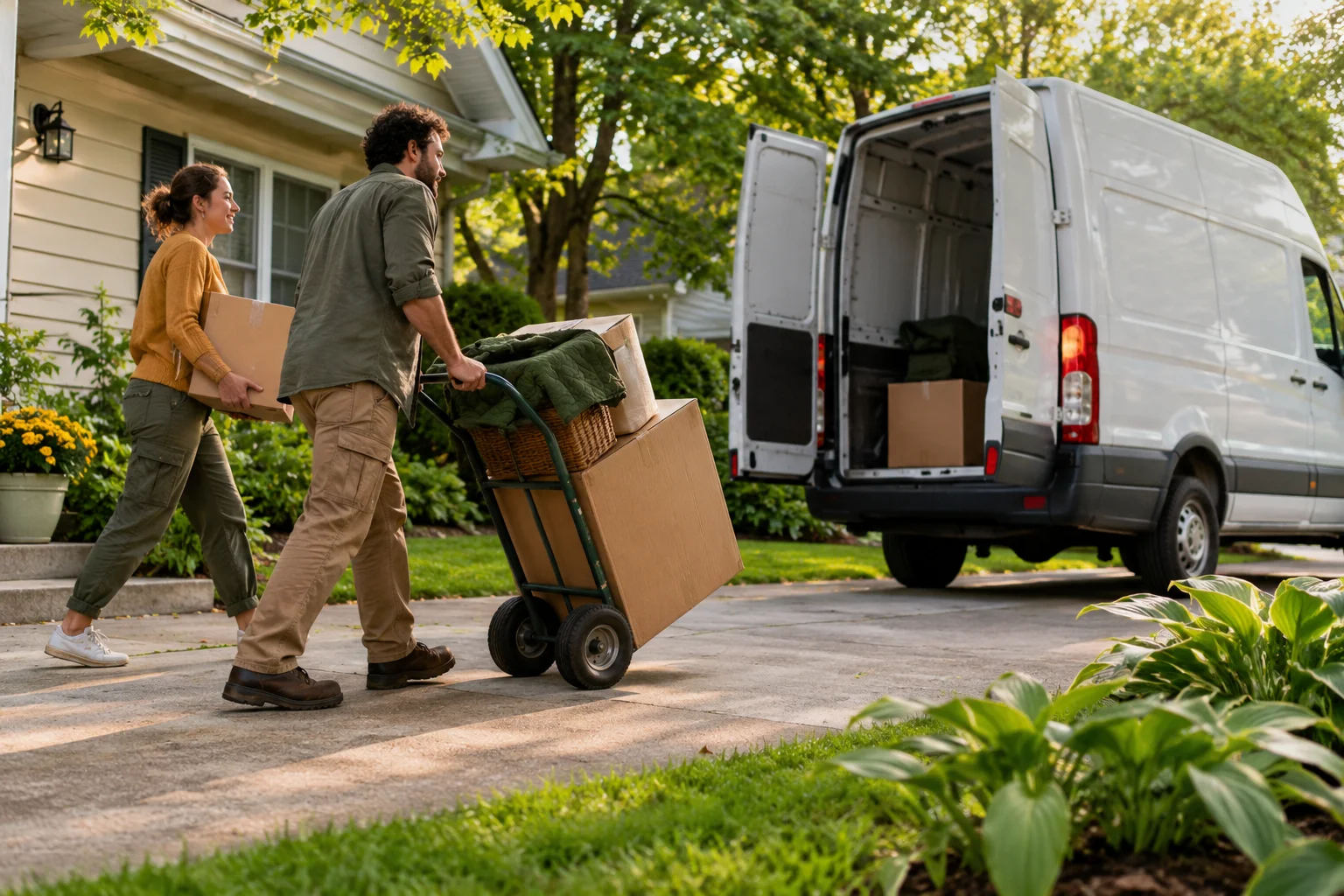
Begin with confirmed access and a complete inventory, then arrange the vehicle and help around those facts. This guide focuses on construction aware planning, careful packing, local account setup, and a workable arrival. It is practical preparation for a move, with provider availability, property permissions, and service details to be confirmed directly by the people responsible.
Check current projects before settling on a route
Grimes maintains an official Current Projects page and publishes city updates. Review those resources near your moving date, then check the intended approach to the property. A route used during a house viewing may not remain the best option several weeks later. Give the moving provider the address and known constraints so the driver can assess a suitable approach.
Do not assume a navigation shortcut is appropriate for a large vehicle. Ask about narrow turns, temporary restrictions, low clearance, or other concerns when they appear relevant. Send the approved entrance and a contact number in writing. If construction affects the immediate property, ask the owner or manager where the vehicle can wait and which surfaces may be used. Planning around current conditions is more useful than relying on a fixed travel estimate that leaves no room for a changed entrance or a detour.
Confirm the property handoff in writing
Obtain the exact time you may enter the destination, how keys will be provided, and who can authorize access. Ask whether cleaning, inspection, or remaining work must happen first. If the home is newly completed, confirm readiness and occupancy arrangements with the responsible professionals before scheduling delivery.
At the old property, identify when possession must be returned and what inspection or cleaning is required. Put both sets of times on one schedule. If they do not align, decide on storage, an extra vehicle day, or another suitable arrangement before loading. Keep personal essentials accessible in case belongings cannot be unloaded immediately. A move plan should explain where people and goods can go if the destination is late. It should not depend on a crew, driver, or friend being able to wait for an unspecified period.
Inspect driveways and unfinished areas
Walk the unloading route and note pavement, gravel, soil, steps, gates, and changes in level. Ask the owner or responsible contractor about any restriction on recently completed surfaces. Do not assume a driveway is ready for a heavy vehicle because passenger cars have used it. Let the driver assess what is appropriate for the truck.
Keep the carrying path separate from active work areas and equipment. If workers still need access, agree how the two activities will be coordinated. Identify safe helper parking and an approved staging area for belongings. Tell the provider about a longer carry or restricted entrance before the estimate is finalized. If the route crosses shared or public space, confirm permissions with the relevant party. An early inspection can reveal a straightforward adjustment that would be much harder to make after the vehicle arrives fully loaded.
Arrange Grimes utility accounts deliberately
The city's official Utilities page is the starting point for current local account information. Review the instructions and confirm what applies to your address. Ask which services are included, what information is needed, and when the account will take effect. In a rental, establish which responsibilities belong to the landlord and which belong to you.
Track city services separately from electricity, gas, internet, and other providers as applicable. Keep confirmations and outstanding steps in one secure record. When moving within the area, make it clear which address is starting and which is ending service. Check the final dates against possession and cleaning responsibilities. Before the truck arrives, review the log for applications that remain incomplete. A requested appointment or form submission may still need another action, so treat confirmation as a specific task rather than assuming the process finished automatically.
Make an inventory before selecting the vehicle
Count the belongings in every room and storage area, including the garage, patio, closets, and utility spaces. List the largest pieces separately and note fragile or unusually heavy items. A house with modest furniture can still contain many cartons or outdoor objects that affect vehicle capacity and labor.
Decide what you will take before estimating the load. Arrange appropriate disposal, sale, or donation for unwanted items and confirm that those plans actually happen. Ask the provider about restrictions for chemicals, fuels, batteries, and equipment needing preparation. If you are arranging a rental vehicle, understand the rental terms and suitable loading equipment. Avoid choosing capacity solely from the number of bedrooms. A detailed inventory gives the provider or rental discussion a concrete basis and reduces the chance of an unexpected second trip.
Compare providers using the complete job
Give every provider the same inventory, access notes, addresses, and schedule. Include an extra stop, storage, packing, or assembly if it is required. Explain the surfaces and entrances that may affect the work, rather than waiting until arrival to mention them. Ask for a written description of what is included.
Review travel charges, minimum time, materials, long carrying distances, cancellation, and changes to the date or load. Ask how delays outside the provider's control are handled. Confirm service scope and availability directly; this guide does not establish that a particular business performs every moving task in Grimes. Keep estimate terms and clarifications together. A useful comparison accounts for the same work at both addresses, not simply a lower starting number based on fewer services or easier access than the property actually offers.
Measure furniture and plan room placement
Measure large furniture and the clear openings along its complete carrying route. Include stair turns, landings, hallway corners, and the space beyond the doorway. Note which parts can safely be removed and who will handle disassembly and reassembly. Photograph awkward areas so the provider can understand the setting.
Draw a simple destination layout for beds, sofas, desks, and shelves. Include door swings and usable walking space. Position large pieces before filling their locations with cartons. Keep hardware, instructions, and small components in identified bags or containers. If a piece will not fit, resolve storage or replacement before loading rather than hoping the problem will disappear. A workable room layout also helps you delay unnecessary purchases until you have lived in the home and understand how the household will use each space.
Pack essentials that travel with the household
Set aside documents, keys, medication, chargers, clothing, and small irreplaceable possessions before the main packing begins. Prepare bedding, towels, toiletries, basic dishes, food, and cleaning supplies for the first evening. Keep these essentials accessible rather than behind the last furniture placed in the vehicle.
For the rest of the load, label cartons by destination room and useful contents. Put labels on multiple sides and use numbers where similar boxes need an inventory. Keep dense items in manageable containers and cushion breakables individually. Photograph electronic connections before disconnecting equipment. Separate cleaning products from food and check restrictions before packing liquids or workshop materials. A straightforward system helps helpers unload correctly and lets your household function while less urgent cartons remain closed. The most useful label answers both where a box belongs and why you might need it soon.
Coordinate people and appointments
Put cleaners, installers, deliveries, movers, and property representatives on the same schedule. Identify what each participant needs and avoid competing uses of a limited driveway or entrance. An internet appointment may be easier after heavy furniture is placed, while cleaning may need to happen before any boxes arrive.
Assign one person to answer routine questions and identify a backup contact. Share access details only with the people who need them. Arrange supervision for children and pets away from open doors and loading routes. Keep meals, water, and rest breaks in the plan. If a delay affects another appointment, notify that provider promptly rather than waiting for its vehicle to arrive. Clear roles allow the household to respond to changes without several people giving contradictory instructions or assuming that someone else has already made the call.
Prepare for changing weather and ground conditions
Discuss the provider's process for unsafe weather and delayed arrivals before move day. Check the forecast as the date approaches and inspect the actual access route when work begins. Rain can change the usefulness of an unpaved area, and cold conditions can make steps or thresholds unsafe. Do not improvise a route that cannot support a heavy load.
Keep suitable footwear, towels, water, and spare clothing available. Use surface protection that is appropriate for the flooring and secure loose edges. Remove packaging from the carrying path as the job progresses. If conditions worsen, pause and reassess rather than maintaining a pace chosen when the route was dry. Communicate changes to the person controlling possession and to other appointments. A little flexibility in the household's schedule makes sensible decisions easier when the original timing no longer fits the conditions.
Document condition and complete the former home
Photograph the destination before unloading where possible, especially floors, doorframes, and existing concerns. Use clear room views as well as closeups. Report property issues through the owner or manager's required process and retain copies. For newly completed work, follow the handoff arrangements provided by the responsible professional.
After loading the old home, check every cupboard, closet, drawer, and storage space. Complete required cleaning and waste removal, then record the return of keys and access devices. Keep the inspection separate from the truck departure so that it receives proper attention. For transported belongings, review the inventory and follow the provider's stated reporting process if a concern appears. Store estimates, receipts, photographs, and correspondence together. Organized records make it easier to finish a practical question without reconstructing the entire day from scattered messages.
Settle in with a manageable completion list
Make sleeping, washing, food preparation, and essential work usable first. Keep exits clear and avoid blocking doors, vents, or access to household equipment. Set up a quiet space for children or pets before attempting every room. Remove empty cartons steadily so that unpacking does not create a new obstacle course.
Use Grimes' official resources to confirm collection instructions and local service contacts. Ask about unusual or large waste before placing it outside, and keep materials needing special handling separate. Update mailing and account addresses, then learn the routes your household needs regularly. Make a short list of repairs, purchases, and remaining setup tasks with an owner for each. Review that list after a few days in the home. A move feels more complete when normal routines work and the remaining decisions are visible, specific, and realistically scheduled.
Prepare a route update message
Before move day, draft a short message you can send if the approach to the home changes. Include the full address, approved entrance, waiting location, and a contact who can answer immediately. Keep the wording factual and avoid suggesting a replacement truck route that the driver has not assessed.
If a detour or property restriction appears, update the provider promptly and ask how the arrival plan should change. Notify helpers separately when they need different parking instructions. Do not assume everyone will see a change made inside a long group conversation.
Save the final confirmed directions with the schedule and remove earlier versions. On arrival, make sure the intended space is still available and that access has not been blocked by another delivery. A concise update process is especially useful when several vehicles are involved, because it gives each person the information needed without circulating conflicting guesses about the best way to reach the house. Ask every participant to acknowledge the final instructions, particularly when an earlier message directed them toward a different entrance or parking area.
Official resources for your planning
Grimes utilities ↗Grimes current projects ↗Check current official instructions for your address and moving date. This guide provides planning information and does not confirm service availability.