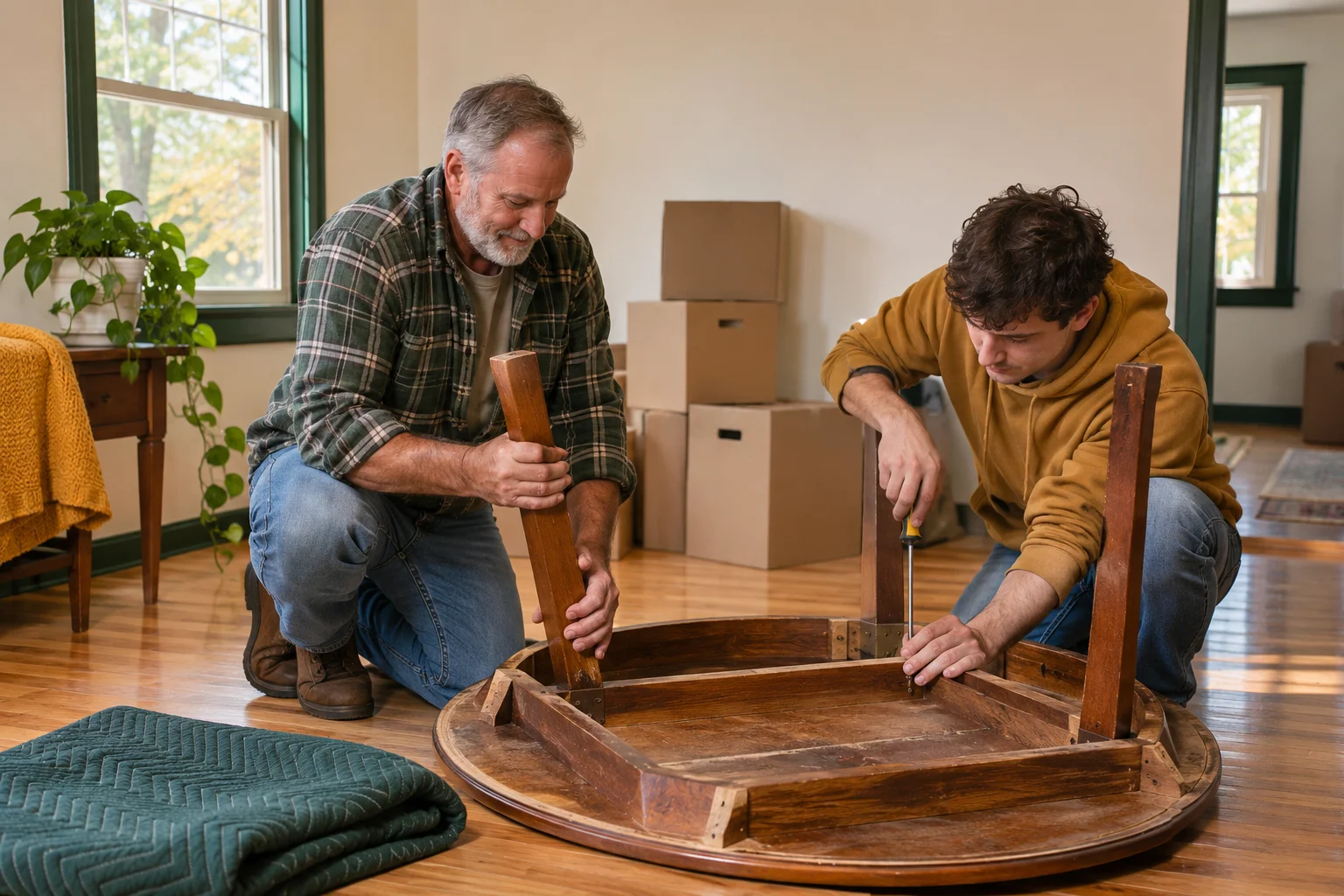
Each situation changes the order of work. Begin by defining what must leave the old address, what can enter the new one, and who can make decisions when an arrangement changes. This guide concentrates on useful preparation, from access measurements and utility questions to unpacking a working kitchen. It does not represent a promise of local moving services.
Define the move before requesting an estimate
Write down all locations involved, including a storage unit, a relative's garage, or a temporary address. A second stop can change scheduling even when it looks close on a map. State whether belongings will travel directly or spend time in storage. Separate the date you want to load from the date you can legally take possession of the destination.
Describe what you expect help with. Carrying sealed cartons is different from packing the kitchen, protecting furniture, and dismantling beds. Note tasks you will complete yourself and assign them a deadline. If you change the scope, send the update in writing. A clear description helps companies assess the work and helps you compare their answers without guessing what each price includes.
Use official Oskaloosa information selectively
The City of Oskaloosa's website is a useful starting point for municipal departments and resident questions. Its Public Works page identifies the Oskaloosa Municipal Water Department as the operator of water, stormwater, and wastewater utilities. Use those official resources to locate the correct contact rather than relying on an old tenant's recollection of an account arrangement.
Ask about the exact service address, the application process, and the timing of account responsibility. Confirm what is included in a rental and what you must establish independently. Electricity, gas, internet, and waste arrangements should each be checked rather than treated as a single package. Save confirmations and keep a list of any service that remains requested but not yet confirmed.
Inspect older furniture routes carefully
An attractive room can still have a difficult approach. Measure the entry opening, hall width, stair landing, ceiling clearance, and the turn into the intended room. Include railings and fixed cabinets in your notes. For a large sofa or mattress, the narrowest point can be a turn rather than a doorway. Share measurements before assuming that an item will fit.
Ask whether doors may be temporarily removed and who is authorized to do it. Do not make alterations to a rental without permission. Photograph existing scuffs and fragile trim before the first load enters. Protect corners using materials appropriate to the finish, and keep the floor route dry. A detailed walkthrough is more useful than describing a house as easy access.
Treat garages and workshops as separate projects
A garage inventory deserves its own session. Sort tools, garden supplies, sports equipment, spare parts, and unfinished projects by what will actually move. Identify containers with chemicals or unknown liquids and ask the mover about prohibited materials. Do not pack them into ordinary cartons and hope that a label will make them acceptable for transport.
For heavy benches or machines, record dimensions and the path to the truck. Remove loose accessories only when you know how to reattach them safely. Put small parts into labeled containers and photograph connections before dismantling. If equipment requires a qualified technician, arrange that work early. Moving day should not begin with a debate about how a specialized machine comes apart.
Create a budget with visible assumptions
Build a worksheet that separates transport, packing supplies, optional labor, temporary accommodation, storage, cleaning, and utility setup. Some lines may remain estimates until you receive written terms. Mark them that way instead of treating a hopeful number as a commitment. Include the cost of meals and household basics during a transition when your kitchen is unavailable.
Compare proposals using the same inventory and access description. Ask what could change the total and how you would approve additional work. Clarify payment timing, cancellation terms, and the consequences of a delayed key handover. Keep a small contingency for ordinary uncertainty. The purpose is to understand decisions before they create expenses, not to predict a universal moving price for Oskaloosa.
Pack for a usable arrival sequence
Assign every carton both a destination and a priority. A kitchen box needed for breakfast should be easy to distinguish from a collection of serving dishes. Use durable labels on more than one side, since the top may be covered in a stack. Keep a separate list of numbered cartons when contents require more detail than the external label provides.
Pack dense items into smaller containers that can be handled comfortably. Check the bottom closure before loading a carton with books or cookware. Fill empty space around fragile articles without forcing pressure onto them. Keep sharp tools protected and disclosed. If you are using professional packing, ask which rooms must remain untouched and make that boundary clear to everyone helping.
Organize school and work continuity
A household move can disrupt routines before the truck arrives. Identify upcoming deadlines, appointments, and essential work equipment. Keep laptops, chargers, school documents, identification, and necessary medication accessible. If reliable internet is required immediately, confirm installation before scheduling remote meetings from the new address. Have an alternative place to work if activation or equipment setup is delayed.
For children, prepare a small arrival kit with familiar bedding, clothes, activities, and snacks. Explain where important belongings will be and what the first evening will look like. Contact the relevant school or childcare provider directly about any enrollment or address requirements. Do not assume a mailing address alone determines an assignment. Store copies of submitted records and note who received them.
Plan vehicle movement at both addresses
A residential street may have enough space for your car without offering a practical position for a larger truck. Photograph the approach and look for tight corners, low branches, steep transitions, and places where a vehicle could become trapped. Tell the provider about shared drives and any need to reverse. Let the operator evaluate the equipment rather than making an unsupported assurance.
Ask the property manager or appropriate city contact if your proposed loading arrangement needs approval. Keep sidewalks, intersections, neighbors' access, and emergency routes clear. If a longer carrying distance is unavoidable, include it in the estimate discussion. Agree on who will direct arriving vehicles so that several helpers do not give conflicting instructions while furniture is being carried.
Protect people during a long workday
Plan rest and food before everyone becomes tired. Keep drinking water, simple meals, basic first aid supplies, and charged phones available outside the load. Give helpers tasks suited to their ability, and avoid creating pressure to lift something they cannot handle safely. An experienced provider should explain the handling plan for difficult items before movement begins.
Make one person responsible for children and one for pets when those responsibilities are needed. Keep both away from open doors and heavy carrying routes. Clear loose rugs and cords before work starts. Check weather conditions and have a pause plan for severe weather, heat, or slippery surfaces. An efficient move depends on safe repetition rather than rushing individual lifts.
Document condition and handover
Photograph significant furniture, appliances, and vulnerable surfaces before loading. Make sure images are clear enough to show the relevant detail and keep them organized by room or item. If you notice a problem at delivery, follow the reporting procedure in your agreement promptly. A vague memory of when a scratch appeared is much harder to resolve than a dated record.
At the old address, complete the required cleaning and inspection after belongings are removed. Check outside areas and built in storage as well as the obvious rooms. Record the return of keys, remotes, and parking devices. Keep final bills and handover messages in your move folder. If a landlord or buyer requests something additional, ask for a clear written description.
Reduce waste without leaving it behind
Decide early which possessions are worth transporting. Sell or donate usable items with enough time for collection, and have a fallback if someone fails to arrive. Confirm acceptance before taking furniture to a donation location. Moving unwanted objects to the new garage often postpones the decision while adding handling work and consuming valuable space.
Check current disposal instructions for bulky waste, electronics, paint, batteries, and other items that do not belong in ordinary household rubbish. Do not combine unidentified substances or leave them for the next occupant. Flatten reusable cartons carefully and store them dry. Keep enough packaging until you have checked the delivered contents and know whether any item needs further documentation.
Settle one routine at a time
Begin by making the home safe to occupy. Locate the shutoffs, electrical panel, exits, and essential controls. Ask the owner or manager to explain anything unfamiliar. Set up beds, a bathroom, and a small food preparation area before opening decorative items. Check that the refrigerator and other essential appliances are operating as expected before restocking them fully.
During the first week, finish address updates and review every outstanding service request. Make a short list of property concerns and report them through the agreed channel. Explore Oskaloosa's official resources when you need current municipal information. If your move connects with Pella, Ottumwa, or another Iowa city, use its guide as a planning reference while confirming the details for each address separately.
Resolve the remaining Oskaloosa planning questions
Should a workshop be packed with the rest of the house? Treat it as a separate inventory first, then decide which items can join the ordinary load. Tools with sharp edges, heavy machines, loose components, and containers of unknown substances need individual attention. Ask the provider for its restrictions and preparation requirements. Keep usable equipment instructions with the relevant item or in an accessible folder. If a machine needs a technician, arrange that visit before the scheduled loading day. A workshop that looks tidy can still contain materials that do not belong in normal moving cartons.
How can you keep costs comparable while the household is still sorting? Give providers a dated inventory and explain which decisions remain open. Ask when they need the final version and how later changes affect their estimate. Do not remove belongings from one company's description while leaving them in another's and then compare the totals as though the jobs are identical. Keep a simple change record when major furniture, another location, or packing work is added or removed. That record gives you a practical basis for requesting an updated written scope.
What if the new house has less storage than expected? Measure the storage that actually exists before allocating furniture and cartons. Identify what must stay readily accessible and what can be kept less conveniently. Sell, donate, or dispose of items deliberately rather than creating a large uncertain pile. If storage is necessary, ask about access, conditions, security, and the agreement's end process. Keep an inventory outside the unit and set a review date. A storage decision should solve a defined space problem instead of postponing every difficult choice indefinitely.
How do you prevent a first week from becoming a search through boxes? Keep a short daily use list and label the relevant cartons accordingly. Prepare enough kitchen and bathroom equipment for ordinary routines, then place work and school supplies where they can be reached. Open cartons in a controlled area and clear empty packaging as you finish. If something is missing, consult the numbered inventory before opening unrelated boxes. Record unresolved questions in one place so the household can divide the work without repeating the same search or assuming another person has already handled it.
Take photographs of storage shelves before dismantling them. Label their parts together and check the intended location before rebuilding. Keep instructions accessible so the unpacking session does not become an avoidable search for missing hardware.
Official resources for your planning
City of Oskaloosa ↗Oskaloosa Public Works ↗Check current official instructions for your address and moving date. This guide provides planning information and does not confirm service availability.